
Solar, Batteries and Smart Devices Are Converging
4 views
Your smart home can already turn on the lights when you arrive, lock the door at bedtime, and tell you when a package lands on the porch.
Yet there’s a bigger problem hiding underneath all those clever routines: the home still treats electricity as something that simply arrives from the wall.
That model is starting to crack.
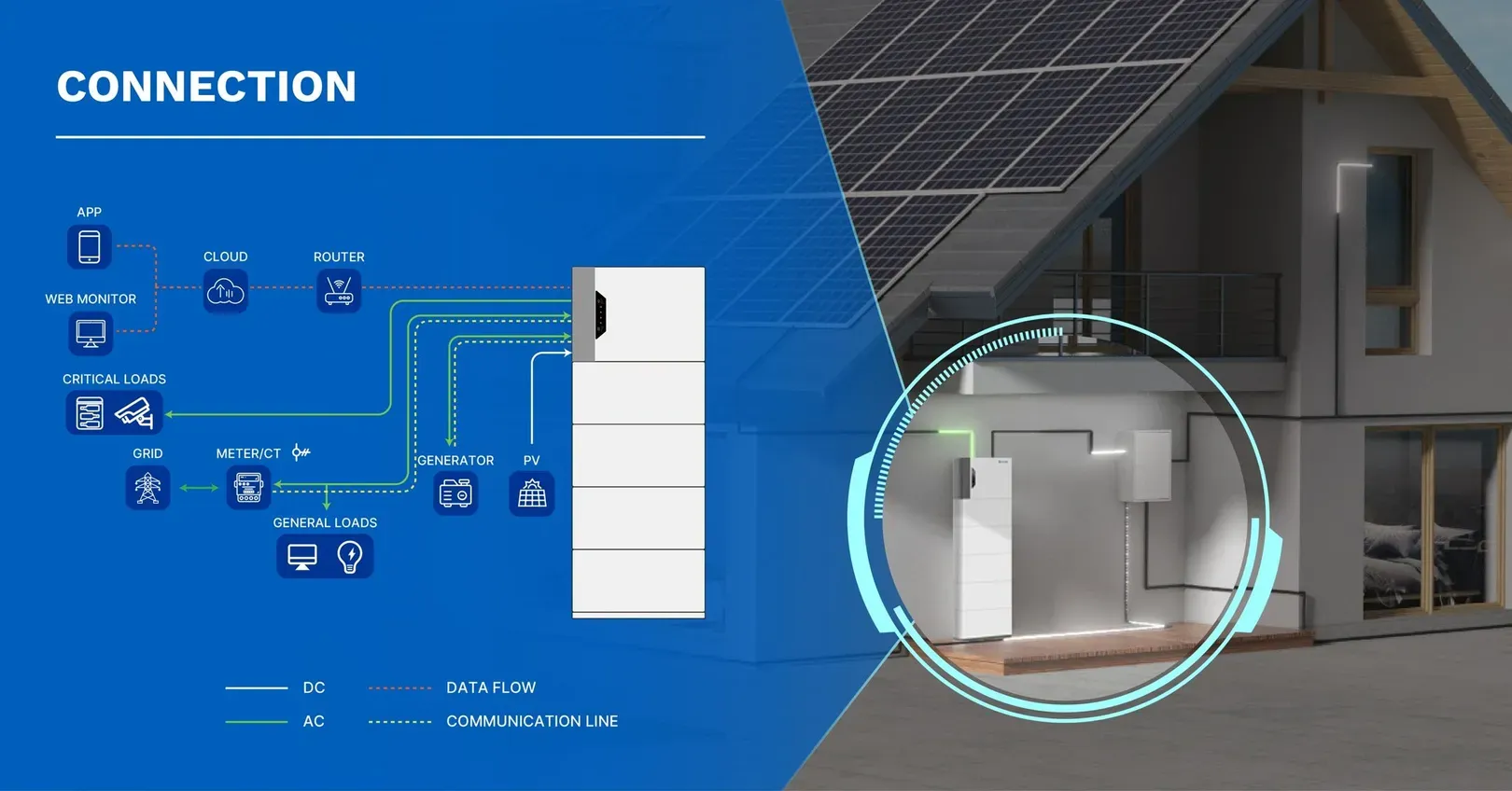
Solar panels generate power when the sun is available. Batteries can store it. Heat pumps, water heaters, EV chargers, and connected appliances can decide when they need to consume it. The smart-home layer is gradually becoming the traffic controller between all of them.
This is a significant shift for gadget buyers. It also explains why the latest smart-home developments feel less like another generation of connected light bulbs and more like the early stages of a home energy operating system.
Gadget Radar has already covered beginner-friendly smart-home gadgets and the practical features appearing in new 2026 devices. Its beginner smart-home guide Its 2026 smart-home device roundup
This is the next layer: what happens when the gadgets start managing the electricity itself?
The smart home is becoming an energy system
The important change isn't simply that solar panels and batteries are getting smarter.
It's that the devices around them are becoming controllable loads.
Consider a sunny Saturday afternoon. Rooftop solar is producing more electricity than the house currently needs. Instead of exporting every spare watt, an energy-management system could use that surplus to charge a home battery, heat water, run a heat pump, or increase an EV's charging rate.
Nothing about the individual devices sounds revolutionary.
The coordination is.
Matter 1.3, released in 2024, added energy reporting and support for energy-management use cases, including EV charging. Matter 1.4 went further, adding device types and capabilities for solar, batteries, heat pumps and water heaters. The specification also introduced energy-management functionality intended to let controllable devices adjust consumption according to forecasts and power-management requirements.
That matters because interoperability has always been one of the irritating parts of smart homes.
A thermostat might have one app. A battery another. The solar inverter might live somewhere else entirely.
Matter doesn't magically solve every compatibility problem, but its direction is unmistakable: energy devices are becoming part of the same connected-home conversation.
Batteries aren't just backup boxes anymore
A home battery used to have a simple job: keep the lights on during an outage.
That's still useful. It just isn't the whole story.
Take Tesla's Powerwall 3. The system has 13.5 kWh of nominal energy capacity, an integrated inverter, six solar inputs with maximum power point trackers, and up to 11.5 kW of continuous on-grid power in the North American configuration. Tesla also lists a 10-year warranty.
That combination changes what the battery can do.
During the day, solar can feed household loads and charge storage. Later, the battery can supply the house when solar production falls. Under a suitable electricity tariff, software can also make the battery's timing matter financially.
But don't confuse 13.5 kWh of energy with 13.5 kW of power.
They're different measurements.
A battery's kWh figure tells you roughly how much energy it can store. Its kW rating tells you how quickly it can deliver that energy. A house with a large battery can still struggle with simultaneous high-power loads if the inverter can't supply enough instantaneous power.
That distinction gets missed surprisingly often during installation quotes.
Enphase takes a different approach with its IQ Battery 5P. Each unit provides 5.0 kWh of usable energy, 3.84 kW of continuous power and 7.68 kW of peak output for three seconds. It uses six embedded grid-forming microinverters and carries a 15-year limited warranty up to 6,000 cycles.
So there isn't one universal "best home battery."
Architecture matters.
The real smart gadget might be the controller
Here's where this becomes interesting for smart-home enthusiasts.
The battery doesn't need to make every decision itself.
An energy-management system can sit above the devices and ask questions such as:
Is solar production currently exceeding household demand?
Is electricity expensive right now?
Is rain or cloud cover expected later?
Does the EV need to be ready by 7 a.m.?
Is the battery being reserved for an outage?
Should the water heater run now or wait two hours?
Can the HVAC system pre-cool the house before a peak-price period?
Apple's EnergyKit shows where software platforms are heading. The framework can provide electricity guidance based on grid cleanliness and utility rates, while apps can submit EV and HVAC load information to Apple's Home app. Apple says the Home app can display historical energy charts covering up to five years when supported by the relevant integrations.
There is a catch.
EnergyKit's electricity guidance is currently limited to the contiguous United States, and Apple requires iOS 26 or iPadOS 26 or later for the framework.
That's a good example of the difference between an exciting platform capability and something every homeowner can actually deploy today.
Your water heater can become a battery of sorts
This sounds strange until you look at the physics.
A heat-pump water heater doesn't store electricity. It stores heat.
That makes the hot-water tank a kind of thermal battery.
ENERGY STAR specifically identifies connected heat-pump water heaters as demand-response resources. Its guidance says connected electric water heaters can shift up to 1 kW during a demand-response event through preheating, assuming the equipment has the necessary communication capability. ENERGY STAR also describes Wi-Fi-connected models with app controls, energy reporting and demand-response functionality.
Imagine the solar surplus at 1:30 p.m.
Instead of sending every excess watt back to the grid, the home could heat water slightly earlier than normal. The family takes showers that evening. The energy was already stored in the tank.
No battery chemistry required.
Simple as that.
EV charging is another huge flexible load
An EV charger can be even more useful because its schedule is often flexible.
If the car arrives home at 6 p.m. and doesn't leave until 7 a.m., there may be no reason to charge at maximum power immediately.
Matter 1.3's EVSE support includes controls for starting and stopping charging, adjusting charging rates and targeting a desired amount of range by a specified departure time. The specification is designed around the idea that charging can be shifted toward cheaper or lower-carbon periods.
That creates an unusually practical automation:
"Make sure I have 60 miles of range by 7 a.m., but otherwise charge when the house has cheap or excess electricity."
That's a much more useful smart-home command than "turn on the kitchen lights."
The networking problem hasn't disappeared
Energy management sounds wonderfully unified on a diagram.
Real houses are messier.
Google's current Matter setup requirements, for example, include IPv6-enabled home networking and a Matter-enabled Google Home hub. Google lists devices such as the Nest Hub (2nd generation), Nest Hub Max, Nest Wifi Pro and Google TV Streamer 4K among compatible Matter hubs, with varying Wi-Fi and Thread capabilities.
That means a supposedly simple installation can still involve:
A Wi-Fi network with IPv6 working correctly.
A Matter controller or hub.
Thread infrastructure for Thread-based devices.
Manufacturer-specific commissioning.
Firmware versions that actually expose the desired Matter features.
And then there are older devices.
A battery or inverter might have an excellent manufacturer API but no Matter support. A smart plug might support Matter but expose only basic controls. A device can carry the Matter logo while the platform you're using hasn't implemented every relevant device type yet.
The logo isn't the whole story.
Cost still separates the enthusiast setup from the practical one
Home energy systems aren't cheap gadgets.
The 2025 National Laboratory of the Rockies Annual Technology Baseline models a representative residential lithium-ion battery system at 5 kW and 12.5 kWh, using LFP chemistry assumptions. It also models residential battery costs separately from installation, permitting and other system components, which is a useful reminder that a battery pack's headline price isn't the installed-system price.
That's why comparing batteries purely by "$/kWh" can be misleading.
A 5 kWh modular battery, a 13.5 kWh integrated system and a whole-home system with multiple inverters aren't interchangeable purchases. Electrical upgrades, backup-panel configuration, permitting, interconnection requirements and installation complexity can move the final number substantially.
For consumers, the sensible comparison is the complete installed system and what it can actually control.
Not the sticker on the battery.
What this means for smart-home buyers
If you're buying smart devices today, energy compatibility deserves more attention than another flashy automation feature.
Look for:
Matter support, especially if you're building across Apple, Google or other ecosystems.
Energy monitoring, ideally with real power and energy measurements rather than vague "eco" scores.
Local control, so a cloud outage doesn't disable basic automation.
Documented APIs or integrations for serious energy equipment.
Time-of-use scheduling if your utility offers variable electricity rates.
Firmware-update support that can add capabilities after purchase.
Thread is useful too, but don't assume Thread automatically means energy management. Thread is a low-power mesh networking technology; Matter is the application/interoperability layer that can expose device functions. Apple describes Thread as an IP-based mesh technology used by compatible smart-home accessories.
Those layers get mixed together constantly.
They shouldn't.
A practical solar-to-smart-home setup
A realistic system doesn't need twenty connected gadgets.
Start with four categories:
Layer | Example | What it contributes |
|---|---|---|
Generation | Solar PV + inverter | Produces electricity |
Storage | Powerwall 3 or IQ Battery 5P | Stores and supplies electricity |
Flexible load | EV charger or heat-pump water heater | Moves consumption |
Controller | Matter/HEMS-capable platform | Coordinates the system |
Then create one useful automation.
Solar surplus → charge battery → heat water → charge EV.
Give the battery an outage reserve. Set the EV's departure time. Let the water heater preheat within a sensible temperature range.
That's enough to reveal whether the system actually saves money and reduces grid consumption—or whether you've simply created four new apps to check every morning.
FAQ
Does Matter already control solar panels and batteries?
The Matter 1.4 specification added support for solar-power and battery device types, including inverters and hybrid solar/battery systems. Actual consumer availability depends on manufacturers and whether individual platforms have implemented those capabilities.
Is a bigger battery always better?
No. Capacity determines stored energy, while inverter power determines how quickly that energy can be delivered. A household with modest nighttime consumption may gain little from paying for substantially more storage.
Can a smart water heater replace a home battery?
Not really. It can shift energy consumption by storing heat, but it can't provide electricity to your refrigerator, lights or network equipment. Think of it as a flexible thermal load, not an electrical battery.
Do I need Matter for a solar-powered smart home?
No. Many energy systems have proprietary apps and integrations that work perfectly well. Matter becomes more attractive when you want equipment from different manufacturers to participate in a shared smart-home ecosystem.
What's the best first device to automate?
Choose the load with both meaningful electricity consumption and scheduling flexibility. For many homes, that means an EV charger, heat-pump water heater, HVAC system or pool pump—not a smart light bulb.
The next smart-home upgrade may be invisible
The most interesting home-energy technology isn't necessarily another screen, speaker or sensor.
It is coordination.
Solar knows when electricity is being produced. The battery knows how much energy is stored. The EV knows when it needs to leave. The water heater knows its temperature. A smart controller can finally make those facts useful together.
Matter 1.4 gives the industry a standard vocabulary for much of that interaction, while platforms such as Apple Home and Google Home are building the software layer around connected devices.
The result won't feel like a futuristic control room.
It should feel boring.
Your car charges before the expensive period. The water heater runs when solar production is high. The battery holds enough energy for the evening. The HVAC system avoids the worst peak-price window.
Nobody presses a button.
That's the point.
If you're upgrading a smart home in 2026, start thinking about energy flows, not just devices. Before buying the next gadget, check its Matter version, energy-management capabilities, local-control options and compatibility with the equipment already sitting in your utility room.
That little bit of homework could matter more than the gadget itself.
smart home solar automation
home battery smart controls
solar Matter devices
smart home energy storage
virtual power plant home
Found this helpful? Share it!