Best Wearable Tech for Sleep Tracking: What Actually Helps You Rest Better
791 views
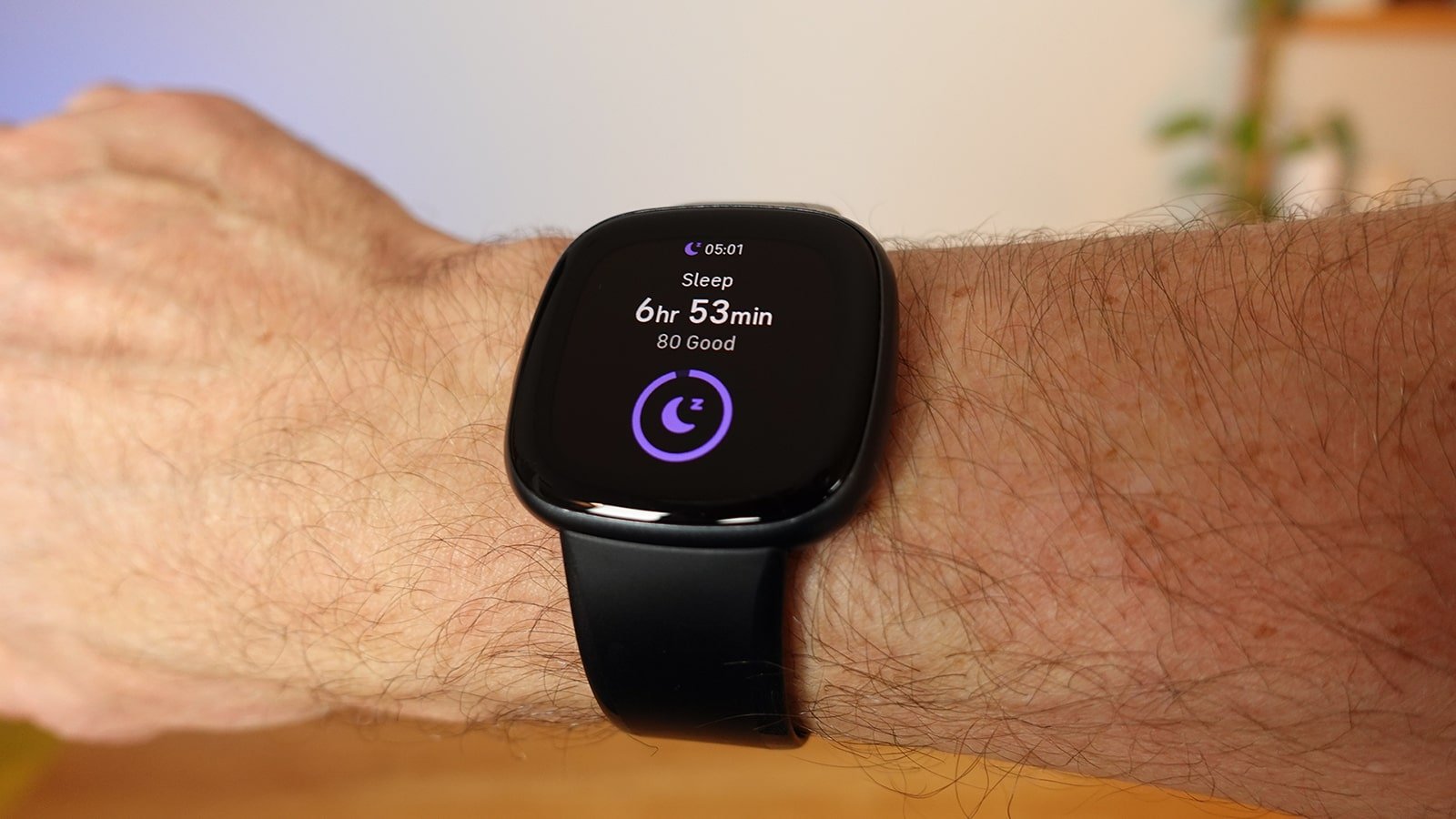
Waking up to a cheerful “Sleep Score: 86” after a night spent staring at the ceiling can feel absurd.
The problem isn't that sleep wearables lack data. They have plenty of it. Heart rate. Movement. Respiratory patterns. Skin temperature. Blood oxygen estimates. The harder question is which of those measurements actually changes what you do tomorrow night.
For a gadget-focused audience, that's the useful dividing line. A good sleep tracker isn't necessarily the one with the most sensors or the flashiest readiness score. It's the device that fits your body, survives real-life annoyances, and gives you feedback you can act on without turning bedtime into another dashboard to manage.
This guide takes a slightly different route from a standard “best sleep tracker” roundup. Instead of simply ranking devices, we'll look at what each type of wearable actually does well, where the data gets fuzzy, and which technology can realistically help you build better sleep habits.
First, the uncomfortable truth: your wearable doesn't really “see” sleep
Consumer wearables don't measure sleep the way a laboratory does.
Clinical polysomnography, or PSG, records signals such as brain activity, eye movement, muscle activity, breathing, and heart rhythms. A smartwatch or smart ring has to infer sleep from a much smaller set of signals—usually accelerometer movement, optical heart-rate data, heart-rate variability (HRV), temperature, and sometimes SpO2.
That distinction matters.
A 2025 systematic review and meta-analysis found that wearables can provide useful estimates for broad, long-term sleep monitoring, but performance varies between devices. No device consistently matched PSG across every sleep metric or sleep stage. Wearables also tended to misestimate things such as total sleep time, sleep efficiency, and time spent awake during the night.
So don't obsess over whether your tracker says you got 1 hour 42 minutes of deep sleep.
Treat that number as a trend.
If deep sleep suddenly falls for three weeks while your bedtime drifts later, your resting heart rate rises, and you genuinely feel awful, that pattern is worth investigating. A random 12-minute change from Tuesday to Wednesday? Probably not.
The trend is useful. The decimal-level precision is theater.
The best sleep wearable depends on what annoys you at night
There are four main categories worth considering.
Wearable type | Best for | Biggest advantage | Biggest frustration |
|---|---|---|---|
Smart ring | Sleep-first tracking | Comfortable and screen-free | Often expensive; some require memberships |
Smartwatch | All-purpose health tracking | One device for daytime and nighttime | Charging and bulk |
Screenless band | Recovery and training | Strong long-term behavior insights | Subscription costs can add up |
Hybrid watch | People who dislike smartwatches | Normal-watch appearance | Usually less interactive insight |
The right choice starts with a boring question: what are you actually willing to wear every night?
A technically brilliant watch that spends half its nights charging on your desk is worse than a modest tracker you use consistently.
Oura Ring 4: still the easiest sleep-first recommendation
Oura Ring 4 is a strong option for people who want sleep data without sleeping in a miniature computer.
The Ring 4 uses Oura's Smart Sensing system and a fully titanium design with recessed internal sensors. Its sleep analysis includes total sleep, sleep stages, nighttime movement, HRV, resting heart rate, blood oxygen data, and broader readiness metrics. Oura also lists a 100-meter water-resistance rating and a typical charging time of roughly 20–80 minutes, depending on the battery level.
Comfort is the real feature here.
No glowing screen. No notification buzzing at 2 a.m. No large case pressing into your wrist when you sleep on your side.
The trade-off is cost. Oura's US membership currently costs $5.99 per month or $69.99 per year, after the included first month for new members. The hardware purchase is separate.
That subscription changes the calculation. A ring can feel like a clean one-time gadget purchase until you realize that the deeper analysis is part of an ongoing service.
Where Oura actually helps
The most useful part isn't the colorful sleep-stage graph.
It's the connection between sleep timing, HRV, resting heart rate, regularity, and recovery. Over several weeks, those relationships can reveal something a simple alarm clock can't: you may technically spend eight hours in bed, for example, but your best nights consistently happen when you stop shifting your bedtime by two hours every weekend.
That's actionable.
Apple Watch: best if you already live in the Apple ecosystem
Buying a separate sleep tracker makes little sense if you already wear an Apple Watch all day and can tolerate it overnight.
Recent Apple Watch software adds more useful sleep context through features such as Sleep Score and the Vitals experience, which can show how metrics such as heart rate, temperature, breathing rate, and other measurements compare with your established baseline. Current Apple sleep tracking also integrates tightly with the Health ecosystem.
The catch is classic smartwatch friction.
You need a charging routine.
A common failure mode goes something like this: wear the watch all day, finish dinner with 12% battery, forget to charge it, then either sleep without it or wake up with a dead watch and no overnight record. Fast charging helps, but habits matter more than charging speed.
For iPhone owners who want one device for notifications, workouts, health data, and sleep, though, the Apple Watch is a very practical compromise.
Not the most sleep-focused device.
Possibly the least redundant purchase.
Galaxy Ring and Pixel Watch: strong choices inside Android
Samsung's Galaxy Ring starts at $299.99 before trade-in in the US and uses three sensors to feed health and sleep information into Samsung Health. Its appeal is straightforward: you get a screen-free form factor and Samsung's ecosystem without putting another smartwatch on the bedside charger.
For someone already carrying a Galaxy phone, that integration matters.
The Pixel Watch line takes the opposite approach. Instead of disappearing into the background, it combines smartwatch features with Google's health platform and Fitbit-derived sleep tracking. Google currently includes a six-month trial of Google Health Premium with a Pixel Watch purchase, after setup and activation, although feature availability and subscription structures can change by market.
My advice here is simple: don't buy an Android wearable solely because its spec sheet lists sleep stages.
Pick the ecosystem you already use. The friction of exporting data, maintaining multiple health apps, or discovering that a feature works best only with a specific phone can get old surprisingly fast.
WHOOP and recovery bands: useful if training affects your sleep
Screenless recovery bands take a different approach.
Rather than treating sleep as an isolated score, devices in this category attempt to connect your night with the rest of your day: training load, recovery, resting heart rate, HRV, and accumulated sleep need.
That can be particularly useful for runners, cyclists, gym regulars, and anyone who has noticed a familiar pattern—hard training late in the evening, followed by a restless night and a mediocre workout the next day.
Research comparing Fitbit Charge 4, Garmin Vivosmart 4, and WHOOP against PSG-based references found meaningful variation by metric. WHOOP showed close agreement for some measures, while Fitbit and Garmin performed moderately for sleep stages and total sleep time. No single consumer device was perfect across the board.
That's exactly why recovery trends are often more useful than a nightly stage breakdown.
If your HRV baseline declines, your resting heart rate rises, and your sleep duration keeps shrinking after a new training block, the wearable has identified a pattern worth responding to—even if its REM estimate isn't laboratory-grade.
What data should you actually pay attention to?
Don't try to optimize everything.
Start with three measurements:
Sleep duration – Are you consistently giving yourself enough time to sleep?
Sleep regularity – Is your bedtime and wake time swinging wildly between weekdays and weekends?
Baseline trends – Are resting heart rate, HRV, temperature deviations, or breathing-related metrics changing alongside how you feel?
That's enough for most people.
Sleep-stage charts are interesting, but they're also the easiest data to overinterpret. A wearable estimating 90 minutes of REM isn't giving you a clinical diagnosis. It's running an algorithm against sensor signals.
Use the data to ask better questions.
Did late caffeine correlate with a longer time to fall asleep? Did alcohol line up with higher nighttime heart rate? Did a warmer bedroom correspond with more restless nights? Did moving your workout from 9 p.m. to 6 p.m. change anything after two weeks?
Now the gadget is doing useful work.
The setup mistakes that quietly ruin sleep tracking
I've seen otherwise excellent devices produce junk simply because the setup was careless.
Don't wear the device too loosely. Optical sensors need reasonably consistent skin contact. A ring that's constantly rotating or a watch that slides around can produce gaps.
Don't change your sleep schedule and expect the baseline to instantly understand you. Many readiness systems become more useful after collecting enough personal history to establish what “normal” looks like for your body.
And don't sleep in a device that bothers you just because reviewers love its data.
Comfort wins.
A slightly less sophisticated ring you wear every night can provide a better longitudinal record than a feature-packed smartwatch you abandon after four uncomfortable evenings.
Sleep tracking can backfire, too
There is a strange point where monitoring sleep becomes another reason to worry about sleep.
You wake up, check the score, see a disappointing number, and suddenly decide you're exhausted—even though you felt fine 30 seconds earlier.
That behavior has a name in sleep discussions: orthosomnia, the tendency to become overly preoccupied with achieving “perfect” sleep metrics.
Don't let the dashboard become the boss.
If you feel rested, functional, and consistent, one ugly graph doesn't automatically mean something is wrong. Conversely, feeling terrible for weeks shouldn't be dismissed because your wearable awarded you an 89.
Your body still gets a vote.
FAQs
Are smart rings more accurate than smartwatches for sleep?
Not automatically. Accuracy depends on the specific device, algorithm, metric, and individual. Rings can be more comfortable for overnight wear, which improves consistency, while research shows that consumer wearables still vary meaningfully compared with PSG.
Can a wearable detect sleep apnea?
Some consumer devices can flag breathing-related patterns or offer sleep-apnea-related features in supported regions, but a consumer sleep tracker should not be treated as a replacement for a formal clinical evaluation.
Which sleep metric matters most?
For most people, start with total sleep duration and consistency. Then look at longer-term changes in resting heart rate, HRV, and other baseline metrics rather than obsessing over a single night's sleep-stage percentages.
Do I need a subscription for sleep tracking?
It depends on the device. Oura, for example, currently charges $5.99 monthly or $69.99 annually in the US for its membership experience, while other devices bundle more functionality into the hardware purchase or offer optional premium services.
Should I wear my smartwatch every night?
Only if it's comfortable and you can keep it charged without disrupting the routine. Consistent data from a device you actually wear is more valuable than theoretically better hardware that spends alternate nights on a charger.
Buy the wearable that changes your behavior
The best wearable tech for sleep tracking isn't necessarily the one that identifies the most sleep stages, packs in the most sensors, or generates the largest pile of charts.
It's the one that helps you spot a repeatable problem.
For pure overnight comfort and detailed sleep context, Oura Ring 4 remains a compelling choice. Apple Watch makes more sense if you're already deep in the iPhone ecosystem. Galaxy Ring is attractive for Samsung users who want a screen-free option, while recovery-focused bands can be especially useful if training load is part of your sleep equation.
Then do the part the wearable can't do for you.
Pick one metric or pattern, change one behavior for two weeks, and see what happens. Move the coffee cutoff earlier. Stop turning bedtime into a moving target. Shift that late workout. Keep the room cooler.
That's where the useful sleep technology begins—and where better rest, occasionally, stops being a number on your wrist.
sleep tracking wearable tech
best sleep trackers
wearable devices for sleep
smart sleep gadgets
sleep monitoring devices
Found this helpful? Share it!